AI’s “iPhone Moment” Product May Well Come from the Humanities
None of the taste you have cultivated will go to waste.
Apple launched the iPhone 17 today. I have mixed feelings.
I also happened to come across this video of 乔帮主 (Steve Jobs, Apple’s co-founder, affectionately nicknamed “Chief Qiao” in Chinese), and deeply agree with it.
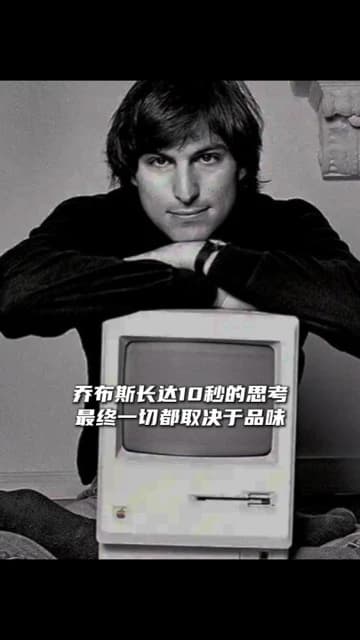
“Taste” sounds intangible, rather like “intuition.” It is a form of judgment that emerges from many factors coming together.
It is very personal, individual, and difficult to standardize. But it does exist, and it can set someone apart.
Today, Apple is living off its established moat of ecosystem and services. The “taste” in its products... may have long since become merely adequate.
Yet this was once its sharpest edge.
This reminds me of a recent conversation with a friend about an AI content creator based in the United States.
Her profile mentions ByteDance’s Bay Area business and an undergraduate degree from Harvard.
She may come from a non-science or non-engineering background, so she has a clear sense of her role in the AI era: the go-to-market layer. She feels that the time for people like her has not yet arrived.
I remember a video in which she explained how she divides the current stages of AI development and the corresponding talent needs.
Roughly: research -> engineering -> product -> go-to-market -> user.
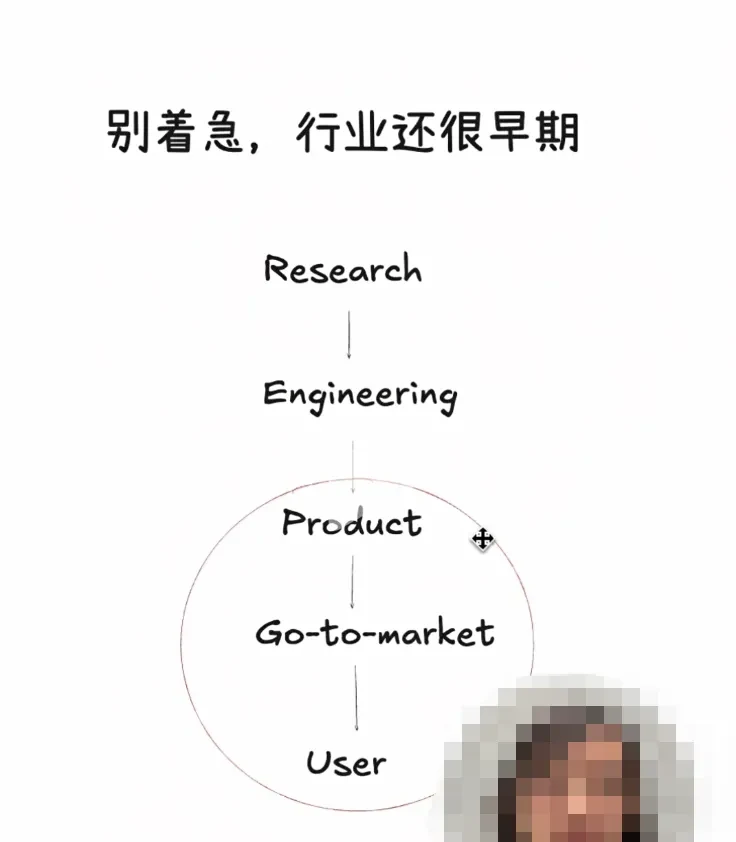
She says AI’s development currently covers only the first two stages—research and engineering—and may only just be entering the early product stage. The industry as a whole is still very young, and will gradually move down the chain toward markets and users.
AI is still focused on foundational infrastructure and products. These early stages are better suited to people with science, engineering, or technical research backgrounds.
People like her, with humanities backgrounds, are better suited to the stage when mature products are brought to market—GTM. That is where they will play their part.
The game hasn’t reached that stage yet. Humanities graduates needn’t rush.
I don’t disagree with her interpretation that AI technology will gradually spread through these layers.
I also agree that she has defined her own role very clearly.
But my friend and I both think that people with humanities backgrounds should, in fact, be making products. The results could be unexpectedly good.
Don’t assume that building AI products requires a science degree or a programming background.
Agentic coding has already opened the door for people who don’t program to create products.
The barrier to programming will only keep falling, becoming increasingly accessible to the wider public. The future is an era of innovation by everyone.
We believe that many good products will come from people without formal training who truly love making them.
Seeing Jobs’s words today made me think of this.
The creativity and taste that amazed the world in Apple’s early products came from the inspiration and imagination of outstanding artists across many fields.
Even if these people had not made the iPhone, they would have created equally remarkable products and achievements elsewhere.
I truly believe that people in the humanities, social sciences, and arts are not peripheral to AI. They may instead be the people who create AI’s “iPhone moment” product.
What matters is embracing AI, rather than feeling that technology has nothing to do with you.
None of the taste you have cultivated will go to waste.
Especially in the AI era, it may be expressed outwardly through products at low cost, turning into realized value.
This may really be the best of times!