In the Future, Every AI Company Will Need a Storytelling Personal Brand Out Front
When you manage a personal brand, content is your product;
A conversation with a business partner left me with a few interesting thoughts.
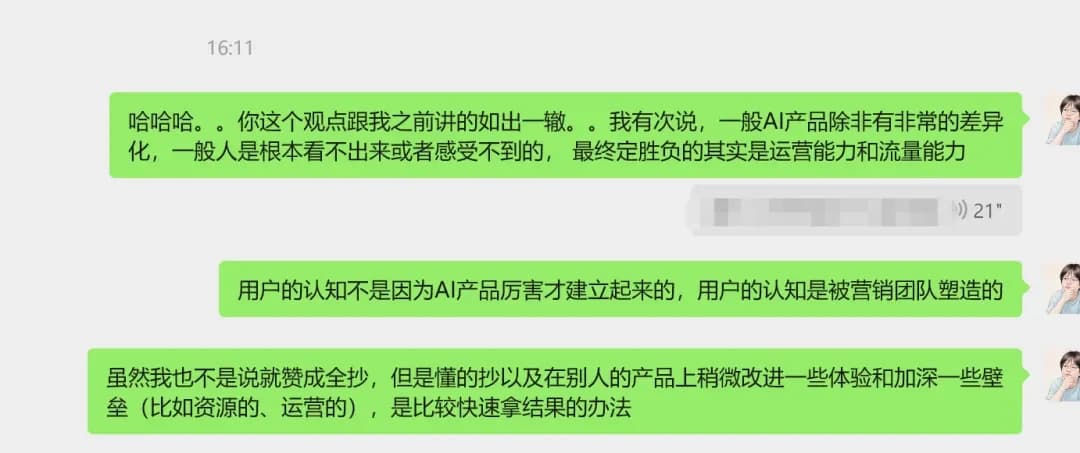
1. Creating content and making products are fundamentally not that different.
When you manage a personal brand, content is your product;
when you are an AI product manager, the product is your expression.
2. When you are small, being a follower is wise. Leaders evolve from followers too.
In university marketing classes, I often heard business-school professors talk about market leaders and market followers.
When I was young and inexperienced, I thought leaders were obviously more impressive. They set the world’s direction, so if you were going to do it, you had to be a leader.
After gaining a little experience, I realized that market positioning is simply a matter of strategy, rather than a question of strength, weakness, right, or wrong. Sometimes being number two is quite a happy position.
There are very few companies like OpenAI, born a leader. Huawei spent ages as number two, until one day it found no one left ahead of it and had to become the leader.
Similarly, many Chinese companies and technologies are now entering uncharted territory, but once started as followers. I believe there will be more in the future.
3. In the future, every AI company or AI product team will need a storyteller with a recognizable personal brand out front—someone who speaks plainly.
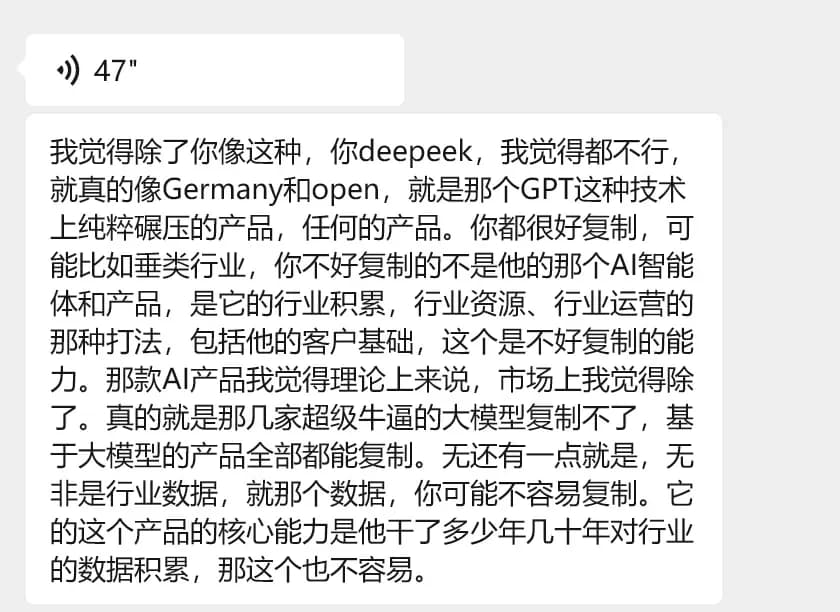
Winning with an AI product comes down not to technology, but to marketing and traffic, operations, industry resources, and how you approach the market.
So the endgame of managing a personal brand and managing an AI product is essentially the same.
Both ultimately require bringing the technology and capabilities into a vertical industry or project, taking deep root there, and growing alongside that business. Only by truly using technology to support business growth can you capture the greatest benefits.
Otherwise, how are you different from an outsourcing provider?
You switch projects every three months. It looks busy, and you earn money—but only for those few months.
The internet era has already shown that the “outsourced services” business model—mainly technical outsourcing here—is not a good one. Eventually it becomes entirely cutthroat competition, and even survival becomes difficult.
I have always felt that if a model had problems in the previous era, it has even less room to survive in the AI era. Competition will squeeze it harder.
Overall, the conclusion is—
In the future, every AI company or AI product team will need a storyteller with a recognizable personal brand out front, someone who speaks plainly. That is where the opportunity lies.
Ha—those are my thoughts.