When AI Learns to “Hear” a Silent World
The meaning of technology has never been only about efficiency or how impressive it looks. It is also about individual people being able to live with greater ease and dignity because of it.
The meaning of technology has never been only about efficiency or how impressive it looks. It is also about individual people being able to live with greater ease and dignity because of it.
This is not AI’s future. This is what it should look like.
I once saw a scene outside a convenience store: a Deaf girl and a shop assistant had been gesturing to each other for a long time. Neither could understand the other, and both were getting anxious.
I thought then: wouldn’t it be wonderful if there were a technology that let ordinary people “understand” sign language?
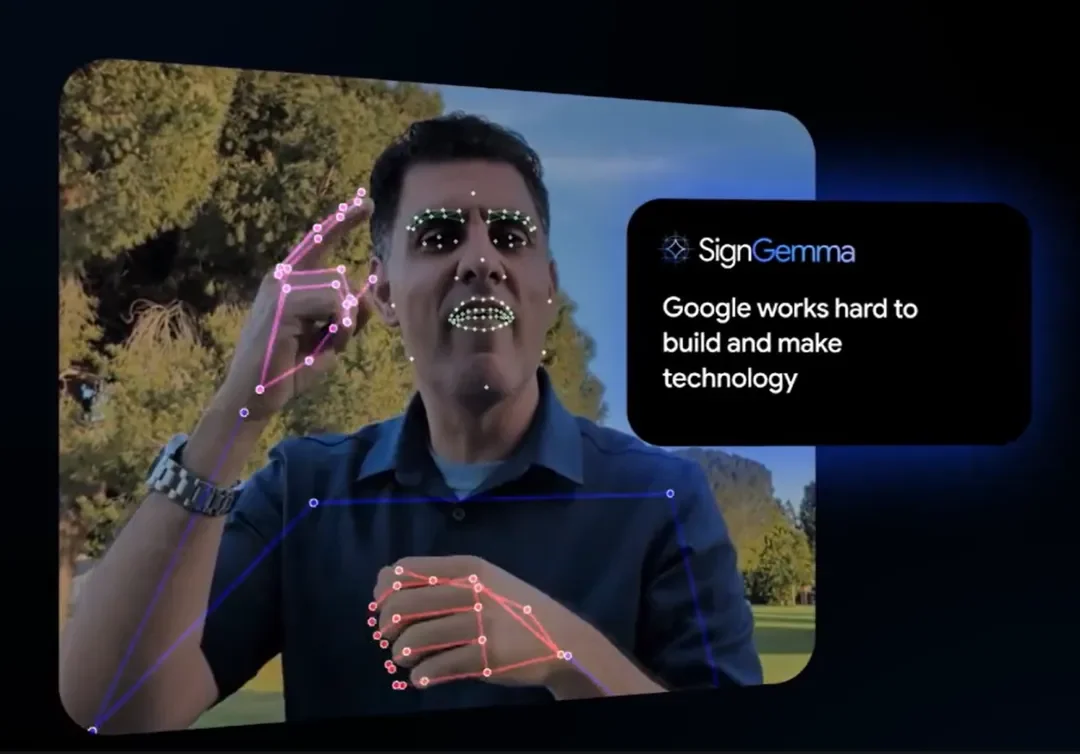
Then yesterday, I saw that Google had introduced a new model called SignGemma. It had actually achieved this.
SignGemma is a powerful sign-language understanding model. It can read signs and translate hand movements and facial expressions into text, translating sign language into spoken language in real time—as though it were “hearing” sign language with its eyes.
In the future, Deaf and hard-of-hearing people may need only a phone to communicate naturally with anyone, without an interpreter or being misunderstood.
We have used AI to write copy, draw pictures, solve maths problems, and improve efficiency.
We have talked so much about how powerful AI is. But what I really want to talk about—or hope someone will notice—is that what moves us most about AI is not how clever it is, but whether it has become kinder.
Technology should not serve only a small group of people. It should let more people be heard, seen, and respected.
This time, it has done something with real human significance. It has opened a door to communication for Deaf and hard-of-hearing people.
In the future, this technology will work on phones and computers. Deaf and hard-of-hearing people going to hospitals, banks, or classes will no longer have to wait for someone to interpret. They will be able to communicate naturally, on equal terms.
This is what AI should be doing!
So when I saw SignGemma, I felt a little moved.
It represents a warmer side of technology: helping someone fulfil their possibilities rather than replacing them.
I have always felt that technology’s destination is never technology itself. It is people, life, and those who are overlooked, silent, or pushed to the margins.
If technology cannot make our lives better, give us more dignity and more choices, then no matter how advanced it is, it has no meaning.
Our generation is fortunate to witness the age of AI. But more importantly, might we also become a generation that helps make it warmer?
I suddenly remembered that ever since I was doing research at university, I have believed that “technology for good” is our future.
This is not a slogan. It is a belief.
Although the work I did later had nothing to do with research, “technology for good” has remained like a seed: always part of my beliefs and ideals.
As AI begins to understand sign language, perhaps this is one small step towards technology doing good.
But for some people, it may be a huge step in life.
AI may not yet be able to change everyone’s fate. But it can quietly open a window for some people.
This is the warmth and meaning of technology.